

Leader of filteration and Separation Technology
Dust Extraction
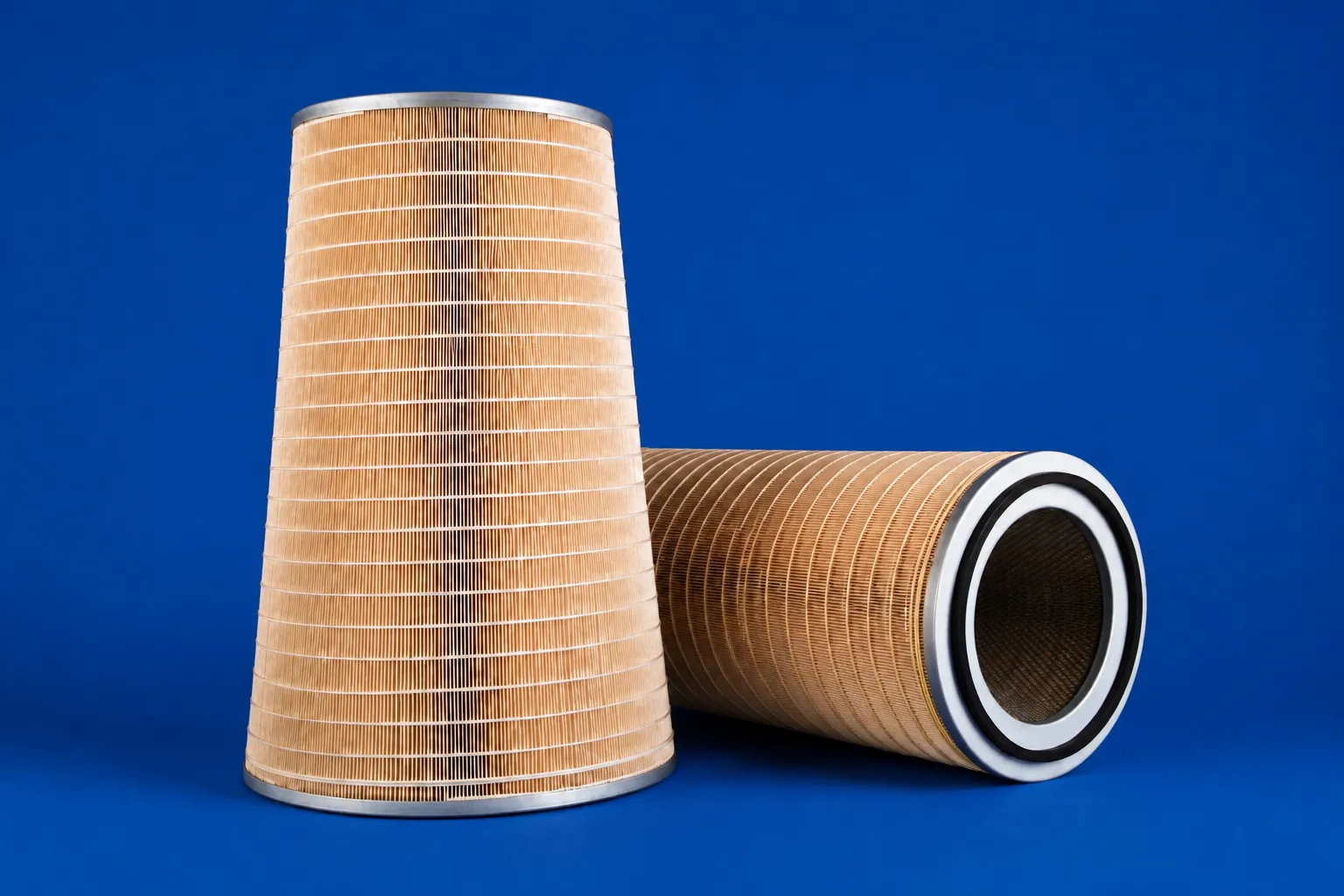

Cylindrical & Conical Air Intake
Cylindrical and Conical Air Intake Filter Elements are high-performance filtration components specifically designed to remove airborne dust, sand, moisture, and other particulate contaminants from intake air supplied to gas turbines, air compressors, diesel engines, blowers, and industrial ventilation systems in oil & gas, petrochemical, and refinery facilities. By delivering clean intake air, these filter elements protect critical rotating equipment, improve operational efficiency, and extend equipment service life.
Manufactured using advanced pleated cellulose, synthetic nanofiber, polyester, or glass fiber media, cylindrical and conical air intake filters provide a large effective filtration area within a compact design. Their pleated construction maximizes dust-holding capacity while maintaining low pressure drop and high airflow, resulting in reduced energy consumption and longer maintenance intervals.
The cylindrical design is widely used in standard air intake systems, while conical filter elements provide increased filtration area and optimized airflow, making them particularly suitable for high-volume air intake applications and environments with heavy dust loading.
Cylindrical & Conical Air Intake
Cylindrical and Conical Air Intake Filter Elements are high-performance filtration components specifically designed to remove airborne dust, sand, moisture, and other particulate contaminants from intake air supplied to gas turbines, air compressors, diesel engines, blowers, and industrial ventilation systems in oil & gas, petrochemical, and refinery facilities. By delivering clean intake air, these filter elements protect critical rotating equipment, improve operational efficiency, and extend equipment service life.
Manufactured using advanced pleated cellulose, synthetic nanofiber, polyester, or glass fiber media, cylindrical and conical air intake filters provide a large effective filtration area within a compact design. Their pleated construction maximizes dust-holding capacity while maintaining low pressure drop and high airflow, resulting in reduced energy consumption and longer maintenance intervals.
The cylindrical design is widely used in standard air intake systems, while conical filter elements provide increased filtration area and optimized airflow, making them particularly suitable for high-volume air intake applications and environments with heavy dust loading.
Typical Applications
- Gas Turbine Air Intake Systems: Protection of gas turbine compressors from airborne dust, sand, and fine particulate contaminants.
- Centrifugal and Reciprocating Air Compressors: Clean intake air to reduce compressor wear and maintain efficiency.
- Diesel Engine Air Intake: Protection of emergency generators and industrial engines operating in refinery environments.
- Industrial Blowers and Fans: Removal of airborne contaminants before entering process equipment.
- Refinery Utility Systems: Air filtration for combustion air and process ventilation equipment.
- Petrochemical Plants: Protection of rotating machinery handling process air.
- Offshore Oil & Gas Platforms: Air filtration in harsh marine environments exposed to salt spray, humidity, and airborne particles.
- Gas Processing Plants: Intake air filtration for compressors and utility equipment.
- Pipeline Compressor Stations: Reliable air filtration for compressor packages operating in dusty outdoor environments.
- Power Generation Facilities: Combustion air filtration for industrial gas turbines and auxiliary equipment.
Key Features & Benefits
- High filtration efficiency for airborne particulate removal
- Large pleated filtration area for maximum dust-holding capacity
- Low pressure drop for improved energy efficiency
- High airflow capacity for demanding industrial applications
- Excellent resistance to moisture and humidity (depending on media type)
- Robust construction for vibration and harsh operating conditions
- Long service life with reduced maintenance frequency
- Protects compressors, turbines, engines, blowers, and ventilation equipment
- Improves equipment reliability and reduces operating costs
- Available in a wide range of sizes, efficiencies, and end-cap configurations
- Compatible with most OEM air intake filtration systems
Construction Materials
Cylindrical and conical air intake filter elements are available in a variety of media and construction materials, including:
- Filter Media: Cellulose, Nanofiber-coated cellulose, Polyester, Synthetic nonwoven media, Glass microfiber, Flame-retardant media (optional), Hydrophobic and water-resistant media (optional)
- Structural Components: Galvanized steel inner and outer liners, Expanded metal support mesh, Stainless steel support structures, Polyurethane end caps, Galvanized steel end caps, Rubber sealing gaskets
Filtration efficiencies are available from coarse pre-filtration through fine particulate filtration, depending on the operating environment and equipment requirements.
Common Applications in Oil & Gas Refineries
- Gas turbine intake filtration systems
- Air compressor intake systems
- Emergency diesel generator air intakes
- Industrial blower air intake units
- Process ventilation systems
- Refinery utility buildings
- Petrochemical processing facilities
- Offshore production platforms
- LNG plants
- Pipeline compressor stations
- Power generation units
- Dust collection and ventilation systems
Cylindrical and conical air intake filter elements provide reliable, high-capacity air filtration for critical rotating equipment operating in challenging industrial environments. Their high dust-holding capacity, low airflow resistance, and durable construction help maximize equipment performance, reduce maintenance requirements, and extend the operational life of compressors, gas turbines, and engines throughout upstream, midstream, and downstream oil & gas facilities.
Top Global Brands
- Donaldson
- Camfil
- Parker Hannifin
- Freudenberg Filtration Technologies
- AAF International
- MANN+HUMMEL
- Koch Filter
- Filtration Group
- Nordic Air Filtration
- Hengst Filtration
Industry Standards
SAMIA PALA design its products to comply with internationally recognized standards, including:
- ISO 29461 – Air Intake Filter Systems for Rotary Machinery
- ISO 16890 – Air Filter Classification
- EN 779 (legacy classification)
- EN 1822 – EPA, HEPA, and ULPA Filter Testing
- ASHRAE 52.2 – Air Filter Performance Testing
- ISO 9001 Quality Management Systems
- ISO 14001 Environmental Management Systems


Bag Filter
Bag Filter Elements are high-capacity liquid filtration components designed to remove suspended solids, sediment, rust, scale, and other particulate contaminants from process fluids in oil & gas, petrochemical, and refinery applications. Engineered for high flow rates and large dirt-holding capacity, bag filters provide an economical and efficient solution for coarse to fine filtration, helping protect critical equipment, improve product quality, and ensure reliable process operation.
Constructed from durable filtration media such as polypropylene, polyester, nylon, PTFE, Nomex®, and other specialty fabrics, bag filter elements are available in a wide range of micron ratings, from coarse filtration to fine particle removal. Their depth filtration structure enables contaminants to be retained throughout the media, maximizing service life while maintaining low pressure drop and high flow performance.
Bag filter elements are installed in single-bag or multi-bag filter housings and are widely used as primary or intermediate filtration stages in refinery and petrochemical processes where high contaminant loading and continuous operation are required.
Bag Filter
Bag Filter Elements are high-capacity liquid filtration components designed to remove suspended solids, sediment, rust, scale, and other particulate contaminants from process fluids in oil & gas, petrochemical, and refinery applications. Engineered for high flow rates and large dirt-holding capacity, bag filters provide an economical and efficient solution for coarse to fine filtration, helping protect critical equipment, improve product quality, and ensure reliable process operation.
Constructed from durable filtration media such as polypropylene, polyester, nylon, PTFE, Nomex®, and other specialty fabrics, bag filter elements are available in a wide range of micron ratings, from coarse filtration to fine particle removal. Their depth filtration structure enables contaminants to be retained throughout the media, maximizing service life while maintaining low pressure drop and high flow performance.
Bag filter elements are installed in single-bag or multi-bag filter housings and are widely used as primary or intermediate filtration stages in refinery and petrochemical processes where high contaminant loading and continuous operation are required.
Typical Applications
- Crude Oil Processing: Removal of rust, sand, scale, and suspended solids from crude oil streams.
- Hydrocarbon Product Filtration: Filtration of diesel, gasoline, kerosene, fuel oil, condensate, and lubricating oils.
- Produced Water Treatment: Removal of suspended solids before reinjection, reuse, or discharge.
- Amine and Glycol Systems: Filtration of corrosion products, degradation particles, and suspended solids from circulating solutions.
- Chemical Injection Systems: Protection of metering pumps and injection equipment from particulate contamination.
- Cooling Water Systems: Removal of suspended solids to protect pumps, valves, and heat exchangers.
- Refinery Process Units: Process liquid filtration for improved equipment protection and product quality.
- Petrochemical Plants: Filtration of chemicals, solvents, intermediate products, and utility fluids.
- Tank Farms and Pipeline Facilities: Product polishing during storage, loading, unloading, and transfer operations.
- Wastewater Treatment: Removal of suspended solids before secondary treatment or final discharge.
Key Features & Benefits
- High dirt-holding capacity for extended service life
- High flow rates with low differential pressure
- Wide range of nominal and absolute micron ratings
- Cost-effective filtration solution for large process volumes
- Excellent particle retention efficiency
- Easy installation and quick bag replacement
- Available in single-layer and multi-layer constructions
- Compatible with standard bag filter housings
- Reduces maintenance costs and equipment downtime
- Protects pumps, valves, heat exchangers, membranes, and instrumentation
- Improves product quality and process reliability
- Suitable for continuous industrial operation
Construction Materials
Bag filter elements are manufactured using a variety of filtration media to meet different process requirements, including:
- Filter Media: Polypropylene Felt, Polyester Felt, Nylon Monofilament Mesh, PTFE (Teflon®), Nomex®, Polyphenylene Sulfide (PPS), High-temperature specialty fabrics
- Support Components: Galvanized Steel Ring, Stainless Steel Ring, Polypropylene Ring, Plastic Flange, Sewn or Welded Seams (depending on application)
Typical filtration ratings range from 1 micron to 1,000 microns, allowing selection for both coarse and fine filtration duties.
Common Applications in Oil & Gas Refineries
Bag filter elements are commonly installed in:
- Crude oil transfer systems
- Fuel filtration packages
- Lube oil filtration systems
- Produced water treatment units
- Cooling water filtration systems
- Amine and glycol filtration packages
- Chemical dosing systems
- Pipeline transfer stations
- Tank farm loading and unloading facilities
- Refinery process units
- Petrochemical production facilities
- Wastewater treatment plants
Bag filter elements provide a reliable, economical, and high-capacity filtration solution for liquid process streams across the oil & gas industry. Their robust construction, large contaminant-holding capacity, and low operating pressure drop make them an ideal choice for protecting downstream equipment, reducing maintenance requirements, and maintaining consistent process performance in upstream, midstream, and downstream operations.
Top Global Brands
- Eaton Filtration
- Parker Hannifin
- Pall Corporation
- Donaldson
- Amazon Filters
- Eaton Hayward
- Filtration Group
- Shelco Filters
- FSI Filters (Filtration Systems Inc.)
- Lenntech
Industry Standards
SAMIA PALA design its products to comply with internationally recognized standards, including:
- ISO 9001 Quality Management Systems
- ISO 14001 Environmental Management Systems
- ASME standards for compatible filter housings
- FDA-compliant materials (where applicable)
- EC Regulation 1935/2004 (food-grade applications where required)
- API recommendations for refinery and petroleum processing equipment
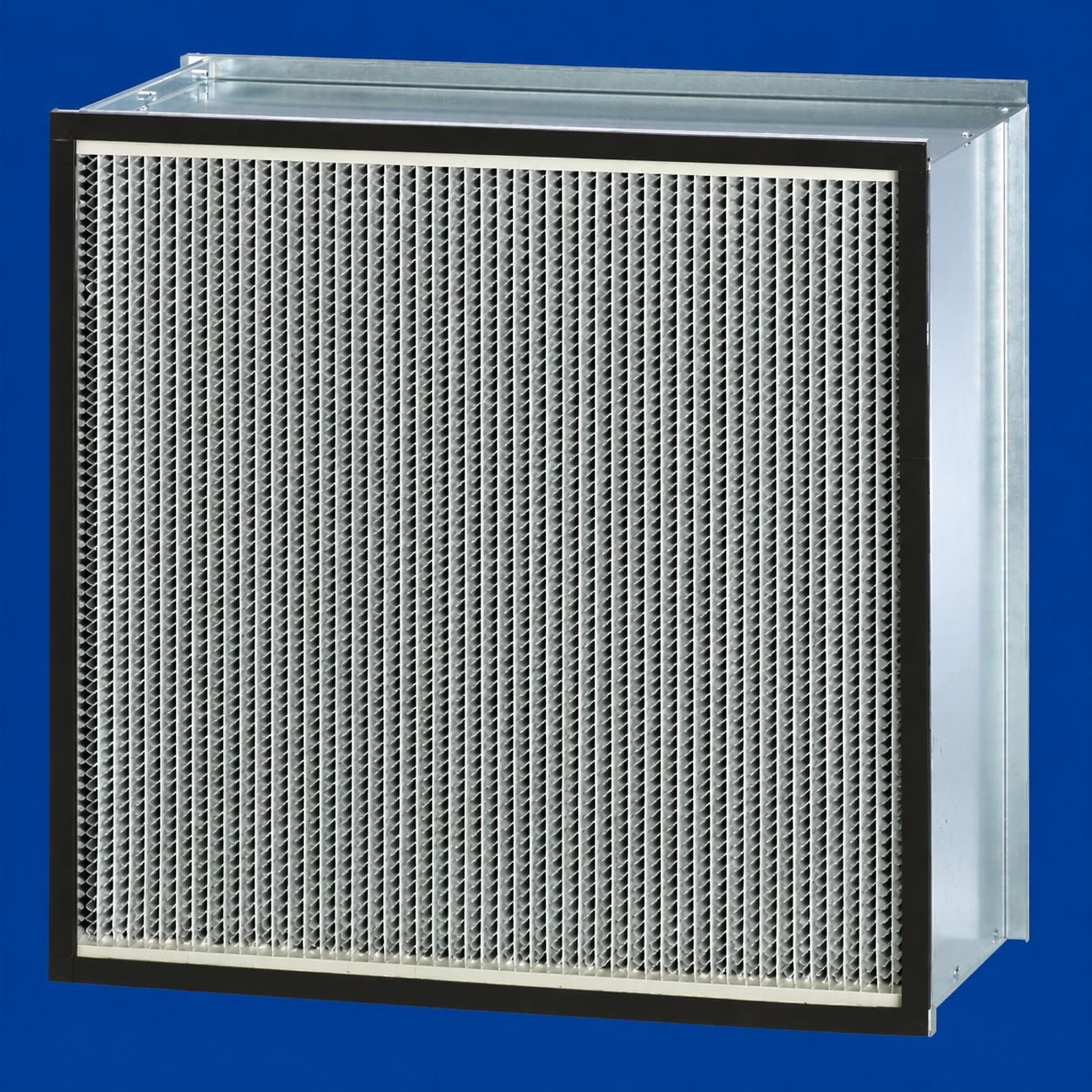

HEPA Filter
HEPA (High-Efficiency Particulate Air) Filter Elements are high-performance air filtration components designed to remove extremely fine airborne particles from air and gas streams with exceptional efficiency. Engineered to capture particles as small as 0.3 microns with an efficiency of 99.95% (H13) to 99.995% (H14) in accordance with EN 1822 and ISO 29463 standards, HEPA filters provide the highest level of particulate filtration for critical applications in oil & gas, petrochemical, and refinery facilities.
Constructed from pleated glass microfiber media separated by precision spacers and enclosed in robust aluminum, galvanized steel, or stainless steel frames, HEPA filter elements offer a large filtration surface area, low airflow resistance, and long operational life. Their filtration mechanism combines interception, inertial impaction, and diffusion to effectively remove dust, smoke, aerosols, microorganisms, and ultra-fine particulate contaminants from the air.
In refinery and petrochemical environments, HEPA filters are typically installed as the final stage of air filtration systems, downstream of panel and pocket filters, ensuring the highest air cleanliness for sensitive equipment, cleanrooms, laboratories, and critical process areas.
HEPA Filter
HEPA (High-Efficiency Particulate Air) Filter Elements are high-performance air filtration components designed to remove extremely fine airborne particles from air and gas streams with exceptional efficiency. Engineered to capture particles as small as 0.3 microns with an efficiency of 99.95% (H13) to 99.995% (H14) in accordance with EN 1822 and ISO 29463 standards, HEPA filters provide the highest level of particulate filtration for critical applications in oil & gas, petrochemical, and refinery facilities.
Constructed from pleated glass microfiber media separated by precision spacers and enclosed in robust aluminum, galvanized steel, or stainless steel frames, HEPA filter elements offer a large filtration surface area, low airflow resistance, and long operational life. Their filtration mechanism combines interception, inertial impaction, and diffusion to effectively remove dust, smoke, aerosols, microorganisms, and ultra-fine particulate contaminants from the air.
In refinery and petrochemical environments, HEPA filters are typically installed as the final stage of air filtration systems, downstream of panel and pocket filters, ensuring the highest air cleanliness for sensitive equipment, cleanrooms, laboratories, and critical process areas.
Typical Applications
- Control Rooms: Final-stage air filtration to protect operators, electronic systems, and process control equipment from fine airborne contaminants.
- Laboratories and Analytical Facilities: Maintaining clean air for accurate testing, calibration, and quality control.
- Cleanrooms: High-purity air filtration for catalyst handling, specialty chemical production, and precision manufacturing processes.
- Gas Turbine Air Intake Systems: Final polishing filtration in high-performance intake systems where exceptionally clean combustion air is required.
- Instrument and Electrical Rooms: Protection of sensitive electrical panels, analyzers, PLCs, DCS equipment, and instrumentation.
- Pharmaceutical and Specialty Chemical Units: Clean air supply for contamination-sensitive production areas integrated within refinery or petrochemical complexes.
- HVAC Systems: Final filtration stage in critical ventilation systems requiring ultra-clean air.
- Offshore Platforms: Air purification for enclosed accommodation modules, control rooms, and technical spaces exposed to marine aerosols.
- Battery and UPS Rooms: Prevention of airborne particulate accumulation on critical electrical equipment.
- Maintenance and Calibration Facilities: High-efficiency air filtration for precision maintenance environments.
Key Features & Benefits
- Removes 99.95% (H13) to 99.995% (H14) of particles at the Most Penetrating Particle Size (MPPS)
- Exceptional removal of fine dust, aerosols, smoke, and microorganisms
- Large pleated media area for high airflow and long service life
- Low pressure drop for optimized energy efficiency
- Protects sensitive instrumentation and electronic equipment
- Improves indoor air quality and environmental cleanliness
- Extends the life of downstream equipment and precision instruments
- Available in standard and high-temperature configurations
- Leak-tested to ensure certified filtration performance
- Compatible with standard HEPA housings and terminal filter units
- Suitable for critical industrial and clean-process environments
Construction Materials
HEPA filter elements are available with a range of materials to suit industrial operating conditions:
- Filter Media: Borosilicate glass microfiber, High-performance synthetic microfiber (selected applications)
- Frame Materials: Aluminum, Galvanized steel, Stainless steel, MDF or engineered wood (commercial HVAC applications)
- Separator Options: Aluminum separators, Hot-melt adhesive separators (mini-pleat design)
- Seal Materials: Polyurethane, Silicone, EPDM, Neoprene
Typical efficiency classifications include:
- H13 and H14 (EN 1822 / ISO 29463)
- Optional ULPA grades (U15–U17) for ultra-critical applications
Common Applications in Oil & Gas Refineries
HEPA filter elements are commonly installed in:
- Central control room HVAC systems
- Distributed Control System (DCS) rooms
- Instrumentation and analyzer shelters
- Electrical and MCC rooms
- Laboratory ventilation systems
- Cleanrooms
- Gas turbine intake filtration systems (final stage)
- Compressor control buildings
- Offshore accommodation HVAC systems
- Utility buildings
- Air handling units (AHUs)
- Petrochemical research and quality control laboratories
HEPA filter elements provide the highest level of airborne particulate filtration available for industrial applications. Their exceptional filtration efficiency, robust construction, and certified performance make them indispensable for protecting sensitive equipment, maintaining clean operating environments, and ensuring reliable operation in critical refinery and petrochemical facilities. When combined with panel and pocket pre-filters, HEPA filters form a complete multi-stage air filtration system that maximizes filter life, minimizes maintenance, and delivers superior air quality.
Top Global Brands
- Camfil
- AAF International
- Parker Hannifin
- Donaldson
- Freudenberg Filtration Technologies
- MANN+HUMMEL
- Filtration Group
- Koch Filter
- MayAir Group
- Nippon Muki Co., Ltd.
Industry Standards
SAMIA PALA design its products in accordance with internationally recognized filtration and quality standards, including:
- ISO 29463 – High-Efficiency Filters and Filter Media
- EN 1822 – High Efficiency Air Filters (EPA, HEPA & ULPA)
- ISO 14644 – Cleanrooms and Associated Controlled Environments
- IEST-RP-CC001 – HEPA and ULPA Filter Testing
- ASHRAE 52.2 – Air Cleaning Device Performance
- ISO 9001 Quality Management Systems
- ISO 14001 Environmental Management Systems
- FDA and GMP requirements (for pharmaceutical applications where applicable)


Oil Mist
Oil Mist Filter Elements are high-efficiency filtration components designed to capture and remove oil aerosols, lubricating oil mist, and fine airborne particulates generated by rotating equipment and lubrication systems in oil & gas, petrochemical, and refinery facilities. These filter elements play a critical role in controlling oil emissions, maintaining equipment cleanliness, reducing lubricant loss, and ensuring compliance with environmental and occupational safety standards.
Manufactured using high-performance glass microfiber, borosilicate fiber, synthetic coalescing media, or multi-layer composite materials, oil mist filter elements efficiently coalesce submicron oil droplets into larger droplets that drain back into the lubrication system for recovery or disposal. This process minimizes oil carryover while allowing clean air to be safely discharged to the atmosphere or recirculated within the system.
Oil mist filter elements are widely installed on lube oil reservoirs, bearing housings, gearboxes, compressors, turbines, pumps, and crankcase ventilation systems where oil mist generation is unavoidable during normal operation.
Oil Mist
Oil Mist Filter Elements are high-efficiency filtration components designed to capture and remove oil aerosols, lubricating oil mist, and fine airborne particulates generated by rotating equipment and lubrication systems in oil & gas, petrochemical, and refinery facilities. These filter elements play a critical role in controlling oil emissions, maintaining equipment cleanliness, reducing lubricant loss, and ensuring compliance with environmental and occupational safety standards.
Manufactured using high-performance glass microfiber, borosilicate fiber, synthetic coalescing media, or multi-layer composite materials, oil mist filter elements efficiently coalesce submicron oil droplets into larger droplets that drain back into the lubrication system for recovery or disposal. This process minimizes oil carryover while allowing clean air to be safely discharged to the atmosphere or recirculated within the system.
Oil mist filter elements are widely installed on lube oil reservoirs, bearing housings, gearboxes, compressors, turbines, pumps, and crankcase ventilation systems where oil mist generation is unavoidable during normal operation.
Typical Applications
- Gas Turbines: Removal of oil mist from turbine lubrication and bearing vent systems.
- Steam Turbines: Recovery of lubricating oil aerosols from bearing housings and oil reservoirs.
- Centrifugal Compressors: Filtration of oil mist generated in lubrication and seal oil systems.
- Reciprocating Compressors: Crankcase ventilation and oil aerosol removal.
- Gearboxes: Elimination of oil mist from gearbox breathers and lubrication reservoirs.
- Pumps and Rotating Equipment: Vent filtration for bearing housings and lubrication systems.
- Seal Oil Systems: Recovery of oil mist from compressor seal oil reservoirs.
- Hydraulic Oil Reservoirs: Prevention of oil aerosol emissions from hydraulic tank vents.
- Refinery Lubrication Systems: Oil mist collection from centralized lubrication units.
- Petrochemical Plants: Protection of equipment rooms and operating environments from airborne oil contamination.
- Offshore Oil & Gas Platforms: Oil mist control in enclosed machinery spaces and compressor modules.
Key Features & Benefits
- High-efficiency removal of oil aerosols and fine particulate contaminants
- Excellent coalescing performance for submicron oil droplets
- Reduces lubricant consumption through oil recovery
- Prevents oil emissions to the atmosphere
- Maintains clean machinery rooms and operating environments
- Protects downstream ventilation equipment from oil contamination
- Low pressure drop for efficient ventilation performance
- High dirt-holding capacity and extended service life
- Resistant to vibration, pressure fluctuations, and harsh operating conditions
- Available in replaceable cartridge and spin-on configurations
- Improves equipment reliability and reduces maintenance costs
- Supports environmental compliance and workplace safety
Construction Materials
Oil mist filter elements are manufactured using premium filtration materials to provide maximum coalescing efficiency and durability, including:
- Filter Media: Borosilicate glass microfiber, Glass fiber coalescing media, Synthetic microfiber, Multi-layer composite media, Polyester support layers, Hydrophobic and oleophobic media (selected applications)
- Structural Components: Stainless Steel 304 and 316L support cores, Galvanized steel support mesh, Aluminum end caps, Polyurethane or epoxy bonded end caps, NBR, Viton®, EPDM, or Silicone sealing gaskets
Available filtration efficiencies typically exceed 99% for oil aerosol removal, depending on particle size and operating conditions.
Common Applications in Oil & Gas Refineries
Oil mist filter elements are commonly installed in:
- Gas turbine lubrication systems
- Steam turbine bearing vents
- Compressor lubrication systems
- Seal oil systems
- Gearbox breathers
- Hydraulic oil reservoirs
- Lube oil tanks
- Rotating equipment bearing housings
- Offshore compressor modules
- Petrochemical process units
- Refinery machinery rooms
- Central lubrication systems
Oil mist filter elements provide an effective solution for controlling oil aerosol emissions and recovering valuable lubricating oil in refinery and petrochemical operations. Their advanced coalescing media, high filtration efficiency, and robust construction help protect rotating equipment, improve workplace cleanliness, reduce lubricant losses, and enhance overall plant reliability. They are an essential component of modern lubrication and ventilation systems where equipment performance, environmental protection, and operational efficiency are critical.
Top Global Brands
- Parker Hannifin
- Pall Corporation
- Donaldson
- Solberg Manufacturing
- Mann+Hummel
- HYDAC
- Eaton Filtration
- Filtration Group
- MAHLE Industrial Filtration
- Alfa Laval
Industry Standards
SAMIA PALA design its products in accordance with internationally recognized engineering and quality standards, including:
- ISO 9001 Quality Management Systems
- ISO 14001 Environmental Management Systems
- ISO 8573 – Compressed Air Quality Standards (where applicable)
- ISO 16889 – Filter Performance Testing (where applicable)
- API 614 – Lubrication, Shaft-Sealing, and Control Oil Systems
- API 619 – Rotary-Type Positive Displacement Compressors
- API 672 – Packaged Centrifugal Air Compressors
- API 692 – Dry Gas Sealing Systems (associated lubrication and vent systems)
- OSHA and environmental emission requirements for industrial air quality


Panel Filter
Panel Filter Elements are flat, high-efficiency air filtration components designed to remove airborne dust, fibers, pollen, and particulate contaminants from ventilation and air handling systems in oil & gas, petrochemical, and refinery facilities. Serving as primary or pre-filtration stages, panel filters protect HVAC equipment, gas turbine intake systems, compressors, cleanrooms, electrical rooms, and control systems by maintaining clean airflow and reducing particulate contamination.
Manufactured from synthetic fiber, fiberglass, polyester, or pleated nonwoven filtration media, panel filter elements provide a large effective filtration area within a compact frame. Their low initial pressure drop and high dust-holding capacity ensure efficient airflow, reduced energy consumption, and extended service life. Depending on the application, panel filters are available in disposable or washable configurations and in a wide range of filtration efficiencies.
In refinery and petrochemical environments, panel filter elements play a vital role in maintaining clean operating conditions, protecting sensitive equipment, improving indoor air quality, and enhancing the reliability of ventilation and combustion air systems.
Panel Filter
Panel Filter Elements are flat, high-efficiency air filtration components designed to remove airborne dust, fibers, pollen, and particulate contaminants from ventilation and air handling systems in oil & gas, petrochemical, and refinery facilities. Serving as primary or pre-filtration stages, panel filters protect HVAC equipment, gas turbine intake systems, compressors, cleanrooms, electrical rooms, and control systems by maintaining clean airflow and reducing particulate contamination.
Manufactured from synthetic fiber, fiberglass, polyester, or pleated nonwoven filtration media, panel filter elements provide a large effective filtration area within a compact frame. Their low initial pressure drop and high dust-holding capacity ensure efficient airflow, reduced energy consumption, and extended service life. Depending on the application, panel filters are available in disposable or washable configurations and in a wide range of filtration efficiencies.
In refinery and petrochemical environments, panel filter elements play a vital role in maintaining clean operating conditions, protecting sensitive equipment, improving indoor air quality, and enhancing the reliability of ventilation and combustion air systems.
Typical Applications
- HVAC Systems: Primary and secondary filtration of supply, return, and recirculated air in refinery and petrochemical facilities.
- Gas Turbine Air Intake Systems: Pre-filtration of combustion air to protect turbine compressors from airborne contaminants.
- Compressor Buildings: Filtration of ventilation air to reduce dust accumulation and equipment wear.
- Control Rooms and Electrical Rooms: Protection of instrumentation, control panels, and electrical equipment from airborne particles.
- Laboratories and Clean Utility Areas: Maintaining clean air for testing, analysis, and process control.
- Process Buildings: Air filtration in production and utility areas to improve environmental cleanliness.
- Offshore Platforms: Air filtration for accommodation modules, control rooms, and enclosed process areas exposed to marine environments.
- Maintenance Workshops: Removal of airborne dust to improve working conditions and protect equipment.
- Air Handling Units (AHUs): Pre-filtration to extend the service life of downstream fine filters and HEPA filters.
- General Industrial Ventilation: Filtration of fresh and recirculated air throughout refinery and petrochemical facilities.
Key Features & Benefits
- High dust-holding capacity for extended filter life
- Low pressure drop for improved energy efficiency
- Large effective filtration area through pleated media design
- Protects HVAC systems, turbines, compressors, and sensitive electronic equipment
- Improves indoor air quality and workplace cleanliness
- Reduces maintenance frequency and operating costs
- Available in disposable and washable configurations
- Lightweight, compact, and easy to install
- Available in multiple filtration efficiency grades
- Compatible with standard HVAC and industrial air filtration systems
- Reliable performance under continuous industrial operation
Construction Materials
Panel filter elements are available in various media and frame materials, including:
- Filter Media: Synthetic nonwoven fibers, Polyester media, Glass microfiber, Pleated cellulose media, Electrostatic synthetic media, Flame-retardant and antistatic media (optional)
- Frame Materials: Galvanized steel, Aluminum, Stainless steel, High-strength plastic, Moisture-resistant cardboard (for light-duty HVAC applications)
Filtration efficiencies are available in accordance with ISO 16890, EN 779, and ASHRAE 52.2 standards, ranging from coarse particulate filtration to fine particulate filtration.
Common Applications in Oil & Gas Refineries
Panel filter elements are commonly installed in:
- Air handling units (AHUs)
- HVAC systems
- Gas turbine air intake filtration systems
- Compressor ventilation systems
- Control room HVAC units
- Electrical and MCC room ventilation
- Laboratory ventilation systems
- Instrument air conditioning units
- Petrochemical production facilities
- Offshore platform ventilation systems
- Administrative buildings
- Utility and maintenance buildings
Panel filter elements provide an economical and reliable solution for air filtration in refinery and petrochemical facilities. Their robust construction, high dust-holding capacity, and low airflow resistance help protect critical equipment, improve ventilation system performance, and maintain clean operating environments. As an essential component of industrial HVAC and combustion air filtration systems, panel filters contribute to increased equipment reliability, lower maintenance costs, and enhanced overall plant efficiency.
Top Global Brands
- Camfil
- AAF International
- Freudenberg Filtration Technologies
- MANN+HUMMEL
- Donaldson
- Parker Hannifin
- Koch Filter
- Filtration Group
- MayAir Group
- Nippon Muki Co., Ltd.
Industry Standards
SAMIA PALA design its products in accordance with internationally recognized engineering and air filtration standards, including:
- ISO 16890 – Air Filters for General Ventilation
- EN 779 (legacy classification for general ventilation filters)
- ASHRAE 52.2 – Method of Testing General Ventilation Air-Cleaning Devices
- ISO 9001 Quality Management Systems
- ISO 14001 Environmental Management Systems
- Eurovent Certification Program
- UL 900 – Air Filter Unit Fire Test Performance
- NFPA requirements for HVAC and ventilation safety (where applicable)
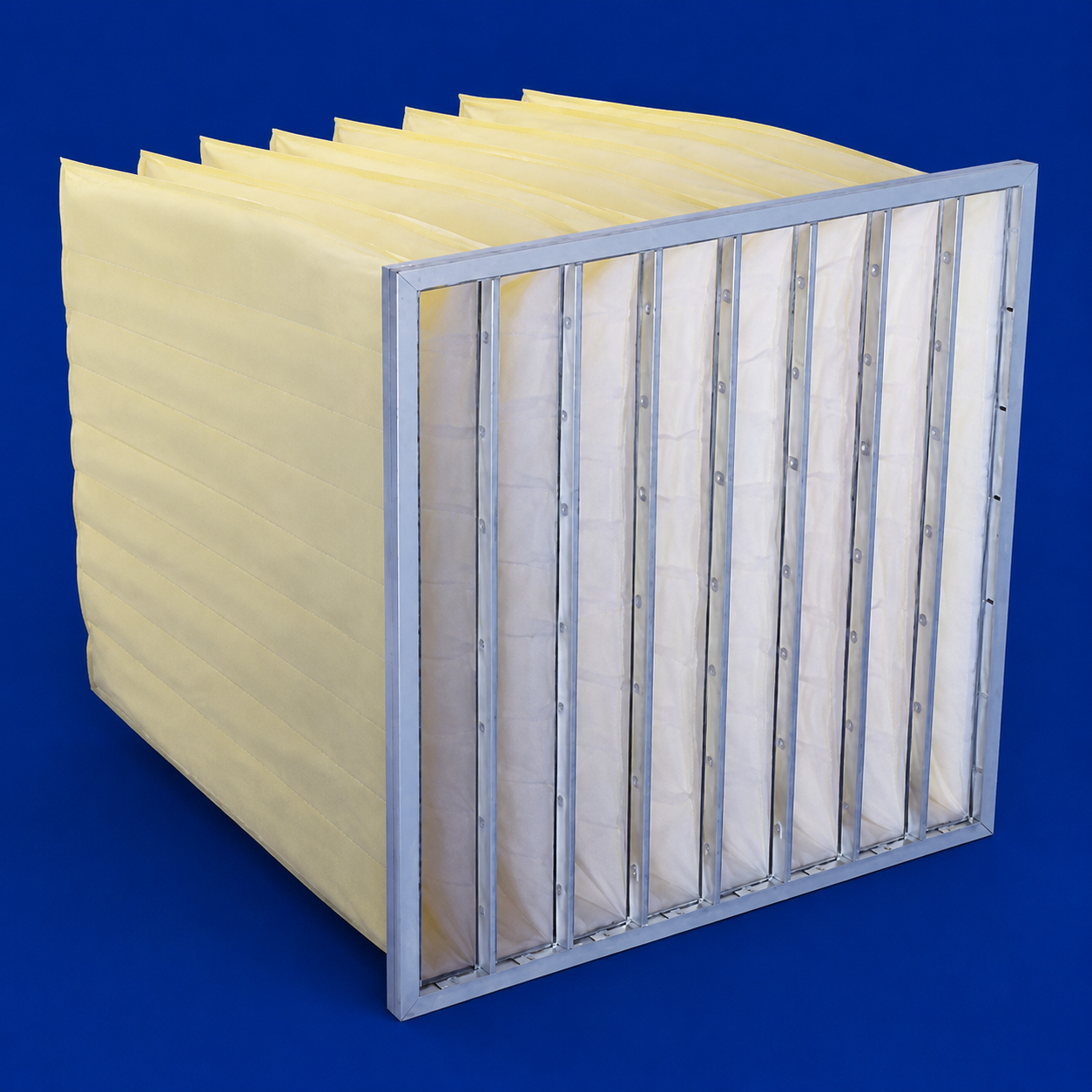

Pocket Filter
Pocket Filter Elements, also known as Bag Filters or Multi-Pocket Air Filters, are high-capacity filtration components designed to remove airborne dust, fine particulate matter, and other contaminants from air and gas streams in HVAC systems, ventilation units, gas turbine air intakes, cleanrooms, and process air handling systems used throughout oil & gas, petrochemical, and refinery facilities. Their multi-pocket design provides a large effective filtration area, enabling high dust-holding capacity, low pressure drop, and extended service life.
Constructed from synthetic or glass fiber filter media sewn into multiple deep pockets and supported by a rigid galvanized steel, aluminum, or plastic frame, pocket filters maximize airflow while maintaining excellent filtration efficiency. The progressive-depth media structure captures larger particles in the outer layers and finer particles deeper within the media, resulting in improved dust retention and reduced airflow resistance.
In refinery and petrochemical environments, pocket filter elements are primarily used for air filtration rather than process fluid filtration. They help maintain clean operating conditions, protect sensitive equipment, improve indoor air quality, and enhance the performance and reliability of HVAC and combustion air systems.
Pocket Filter
Pocket Filter Elements, also known as Bag Filters or Multi-Pocket Air Filters, are high-capacity filtration components designed to remove airborne dust, fine particulate matter, and other contaminants from air and gas streams in HVAC systems, ventilation units, gas turbine air intakes, cleanrooms, and process air handling systems used throughout oil & gas, petrochemical, and refinery facilities. Their multi-pocket design provides a large effective filtration area, enabling high dust-holding capacity, low pressure drop, and extended service life.
Constructed from synthetic or glass fiber filter media sewn into multiple deep pockets and supported by a rigid galvanized steel, aluminum, or plastic frame, pocket filters maximize airflow while maintaining excellent filtration efficiency. The progressive-depth media structure captures larger particles in the outer layers and finer particles deeper within the media, resulting in improved dust retention and reduced airflow resistance.
In refinery and petrochemical environments, pocket filter elements are primarily used for air filtration rather than process fluid filtration. They help maintain clean operating conditions, protect sensitive equipment, improve indoor air quality, and enhance the performance and reliability of HVAC and combustion air systems.
Typical Applications
- HVAC Systems: Filtration of supply, return, and recirculated air in refinery buildings, control rooms, laboratories, and administrative facilities.
- Gas Turbine Air Intake Systems: Pre-filtration of combustion air to protect compressor blades and improve turbine efficiency.
- Compressor Buildings: Removal of airborne dust before ventilation air enters compressor enclosures.
- Control Rooms and Electrical Rooms: Protection of electronic equipment and instrumentation from airborne contaminants.
- Petrochemical Processing Facilities: Clean air filtration for production areas and utility buildings.
- Clean Utility Air Systems: Removal of dust and suspended particles from process ventilation systems.
- Laboratories and Quality Control Areas: Maintenance of clean indoor air for analytical and testing environments.
- Offshore Platforms: Air filtration for accommodation modules, control rooms, and process buildings exposed to marine environments.
- Maintenance Workshops: Reduction of airborne dust to protect personnel and equipment.
- General Industrial Ventilation: Filtration in air handling units (AHUs) and ventilation systems throughout oil & gas facilities.
Key Features & Benefits
- Large filtration surface area through multi-pocket construction
- High dust-holding capacity for extended service life
- Low initial pressure drop and reduced energy consumption
- Stable airflow under varying operating conditions
- Excellent particle removal efficiency
- Lightweight and easy to install
- Available in standard and high-efficiency grades
- Reduces maintenance frequency and filter replacement costs
- Protects HVAC equipment, heat exchangers, coils, and fans
- Improves indoor air quality and workplace cleanliness
- Suitable for high-airflow industrial ventilation systems
Construction Materials
Pocket filter elements are available in various configurations, including:
- Filter Media: Synthetic nonwoven media, Glass microfiber media, Progressive-density synthetic fibers, Flame-retardant media (optional), Antistatic media (optional)
- Frame Materials: Galvanized steel, Aluminum, High-strength plastic, Stainless steel (for corrosive environments)
Typical filtration efficiencies are available in accordance with ISO 16890 and EN 779 classifications, ranging from coarse dust filtration to fine particulate filtration.
Common Applications in Oil & Gas Refineries
Pocket filter elements are widely installed in:
- Air handling units (AHUs)
- HVAC systems
- Gas turbine intake filtration systems
- Compressor building ventilation
- Control room HVAC systems
- Electrical and MCC room ventilation
- Laboratory air handling systems
- Clean utility buildings
- Petrochemical processing facilities
- Offshore platform HVAC systems
- Administrative buildings
- Maintenance workshops
Pocket filter elements provide an efficient and economical solution for high-capacity air filtration in refinery and petrochemical facilities. Their large dust-holding capacity, low pressure drop, and reliable filtration performance help protect critical equipment, maintain clean operating environments, and improve the efficiency of ventilation and combustion air systems. As an essential component of industrial HVAC and air intake systems, they contribute to safer operations, reduced maintenance costs, and enhanced plant reliability.
Top Global Brands
- Camfil
- AAF International
- Freudenberg Filtration Technologies
- MANN+HUMMEL
- Donaldson
- Parker Hannifin
- Koch Filter
- Filtration Group
- MayAir Group
- TROX GmbH
Industry Standards
SAMIA PALA design its products in accordance with internationally recognized engineering and air filtration standards, including:
- ISO 16890 – Air Filters for General Ventilation
- EN 779 (legacy classification for general ventilation filters)
- ASHRAE Standard 52.2 – Method of Testing General Ventilation Air-Cleaning Devices
- ISO 9001 Quality Management Systems
- ISO 14001 Environmental Management Systems
- Eurovent Certification Program
- UL 900 – Air Filter Unit Fire Test Performance
- NFPA requirements for HVAC and ventilation safety (where applicable)